








Lalbagh Botanical Garden is one of the most photographable places in Bengaluru. Not because it has dramatic scenery or exotic subjects — although it has both — but because of the sheer variety of things to photograph: ancient trees with towering canopies, manicured flower beds, a Victorian glass conservatory, a peaceful lake with wading birds, and the interplay of light and shadow that changes every hour of the day.
Whether you are shooting with a professional camera or a smartphone, this guide covers the best spots, the right times, and the specific tips that make the difference between a forgettable snapshot and a photograph worth keeping.
The Single Most Important Factor: Light
Photography at Lalbagh lives and dies by the light. The garden’s dense canopy means that midday light (10 AM to 3 PM) creates harsh contrasts — bright white patches on open lawns, deep shadows under trees. This is the worst time for most types of garden photography.
The two golden windows are early morning (6:00–8:30 AM) and late afternoon (4:30–6:30 PM). In the morning, the soft angled light comes through gaps in the trees at a low angle, creating long shadows and warmly lit leaves. The lake area in particular is extraordinary at 7 AM on a clear January morning — a near-perfect reflection of the trees, occasional mist, and birds moving on the water.
The evening light on the Glass House facade — particularly in October and November when the sky is often a deep blue — is one of the most beautiful architectural photography opportunities in the city.
Best Photography Spots in Lalbagh
1. The Glass House — Architectural and Structural
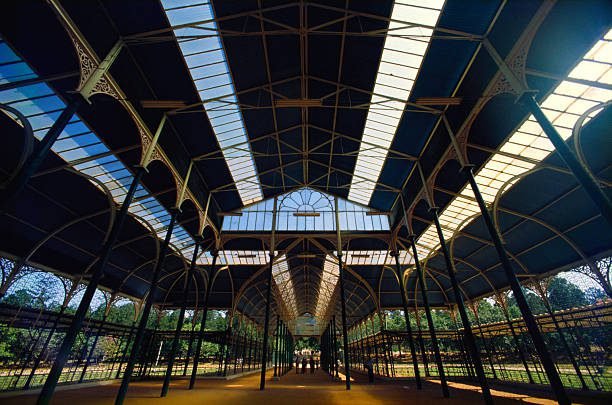
The Glass House is the obvious first stop. Shoot it from the wide open lawn to the south in the morning hours for a clean, symmetrical composition. The ironwork detail is excellent for close-up shots — look for the ornate joints and the repetition of the arched ribs. Inside (during flower shows), the combination of natural light through the glass panels and the vivid colors of the floral displays creates genuinely stunning photographs. Use the entrance as a frame and shoot into the depth of the interior.
2. Lalbagh Lake — Reflections and Wildlife
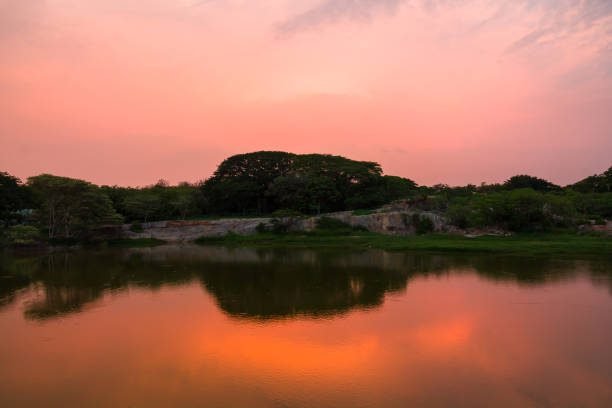
The lake is best photographed between 6:30 and 8:00 AM when the water is still and reflections are sharp. Walk along the eastern bank of the lake for the best angles — the treeline reflected in the water, with the occasional bird in flight, produces classic natural landscape photographs. For wildlife photography, position yourself near the shallow northern end of the lake where herons and egrets feed most actively.
Patience matters here. Sit quietly for 15–20 minutes and the birds will stop reacting to your presence. A telephoto lens (or the zoom on your phone) lets you fill the frame with a bird without disturbing it.
3. The Rose Garden — Color and Macro
The Rose Garden near the West Gate is peak season from November to February. For macro shots, shoot individual blooms with the background thrown out of focus — drop to the same level as the flower and shoot horizontally rather than downward. Look for roses with droplets of morning dew, which are particularly common on winter mornings. For wider compositions, the formal pattern of the rose beds makes for satisfying geometric frames when shot from a slightly elevated position.
4. Heritage Trees — Scale and Texture
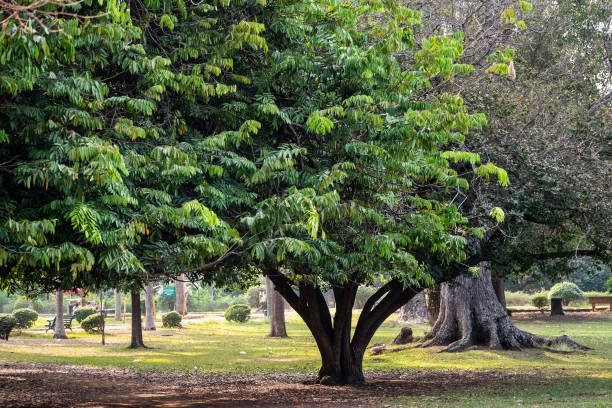
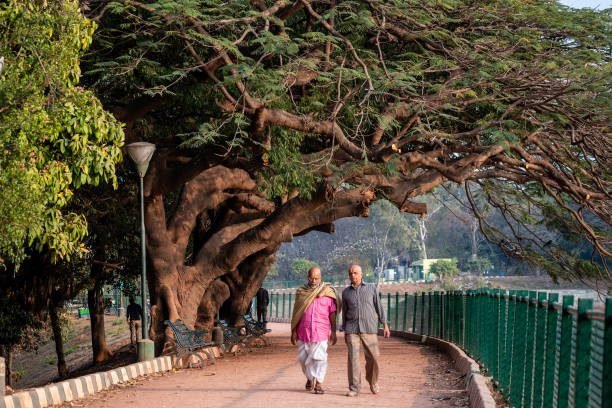
The ancient heritage trees in Lalbagh are extraordinary photographic subjects. The challenge is conveying their scale — include a human figure (or ask a companion to stand near the base) to make the size legible. The bark textures of the oldest trees are also worth close-up study. The Silk Cotton tree in the central garden area and the massive Rain Trees near the eastern paths are particularly dramatic.
For canopy shots, lie on the ground and point the camera straight up — the overlapping canopies against the sky create abstract patterns that are particularly beautiful on partly cloudy days.
5. The Garden Paths — Light and Depth
Lalbagh’s paths are themselves beautiful photographic subjects. In the early morning, the paths that run east-to-west catch the low morning light beautifully — a tunnel of trees with light streaming from the far end, dappled shadow on the ground, perhaps a lone morning walker in the middle distance. This is one of the most classic compositions in garden photography, and Lalbagh delivers it repeatedly.
6. The Flower Beds Near the West Gate — Color
The formal flower beds near the West Gate are replanted seasonally to always have something in bloom. During the flower shows, these are transformed with elaborate displays. At any other time of year, they are maintained with marigolds, petunias, salvias, and seasonal flowers. The best compositions here are overhead shots (use a raised arm or find a slight rise) or wide-angle shots that capture the beds in relation to the surrounding trees.
Tips for Smartphone Photographers
Most modern smartphones do excellent work in Lalbagh’s conditions. A few specific tips:
- Use portrait mode for flower close-ups — the background separation makes a big difference
- Turn on HDR for the Glass House exterior to balance the bright sky and darker building
- For the lake reflections, tap on the water surface to set your exposure on the reflection rather than the sky
- The 2x or 3x zoom lens on recent smartphones is ideal for bird photography — avoid the digital zoom beyond this as it degrades quality
- Shoot in RAW if your phone supports it — the post-processing flexibility is worth it
Tips for DSLR and Mirrorless Photographers
A 24–70mm or 24–105mm zoom lens covers most situations in Lalbagh beautifully. Add a 70–200mm or 100–400mm telephoto if you are planning serious bird photography. A polarising filter is very useful for the lake reflections — it removes glare from the water surface and deepens the sky color.
If you are shooting the flower show, a fast 50mm or 85mm lens is wonderful inside the Glass House, where the light levels are moderate and you want to avoid flash.
What to Do and Not Do
A professional camera setup (tripod, large telephoto, multiple lenses) is generally fine in Lalbagh for personal photography. The garden does not charge additional fees for amateur or tourist photography. However, commercial photography and video production require prior permission from the Karnataka Horticulture Department.
Tripods are somewhat impractical on the paths during busier hours, as they block foot traffic. The early morning visit (6:00–8:00 AM) solves this problem — you will have most of the key spots to yourself.
Do not step into the flower beds for a better angle. This seems obvious but it is common enough that the garden staff have to remind visitors regularly. The beds are maintained by a dedicated team and even a few steps can damage months of careful planting.
The Flower Show: A Special Photography Opportunity
If you have any serious interest in photography, plan your Lalbagh visit around the Republic Day or Independence Day Flower Show. The Glass House displays during these shows are genuinely exceptional — the scale and color of the floral installations are unlike anything the garden shows at any other time.
Arrive at opening time (around 7 AM) to get into the Glass House with the best light and before the crowds build. The first 90 minutes of a flower show morning is the best photography window of the entire year at Lalbagh.